Source Digital Oscilloscope with Built in Signal Source for Power, Voltage, and Frequency
Find 30 digital oscilloscope with built in signal source models from China suppliers. Compare specifications including bandwidth, sampling rate, and memory depth for electric power, voltage, and frequency measurement applications.
Key considerations
Products List






Comprehensive Sourcing Guide
Strategic Sourcing Guide for Digital Oscilloscopes with Built-in Signal Sources
Understanding the Core Capabilities and Technical Architecture
When sourcing a digital oscilloscope with a built-in signal source, buyers must first distinguish between the fundamental architecture of the device and the specific value-add of the integrated function generator. The core keyword implies a hybrid instrument capable of both capturing complex waveforms and generating precise test signals without requiring external hardware. Based on observed market data, these instruments are categorized primarily as digital oscilloscopes, with some listings also referencing analog variants, though the digital category dominates the modern procurement landscape.
The technical specifications for these devices vary significantly depending on the intended application. High-performance models observed in the market feature bandwidths exceeding 1GHz, which is critical for analyzing high-frequency signals in power electronics and telecommunications. Sampling rates are equally variable, with observed specifications ranging from 200MSa/s for general-purpose units to 2GSa/s for high-fidelity applications. The sampling mode is predominantly real-time sampling, ensuring that transient events are captured accurately without aliasing.
A critical differentiator in this category is memory depth. The market data indicates a wide range of capabilities, from 8 megapoints (8m) in standard dual-channel units to 12 megapoints (12Mpts) and even 140 megapoints (140Mpts) in deeper memory configurations. A deeper memory depth allows for longer acquisition times at high sampling rates, which is essential for debugging complex digital protocols or capturing rare glitches in power measurement scenarios. The vertical resolution is typically 8-bit, though some advanced models may offer higher fidelity. The display technology is also a key specification, with 7-inch TFT screens being a common standard for handheld and desktop units, providing sufficient real estate for viewing multiple waveforms simultaneously.
Structural Variations and Form Factor Considerations
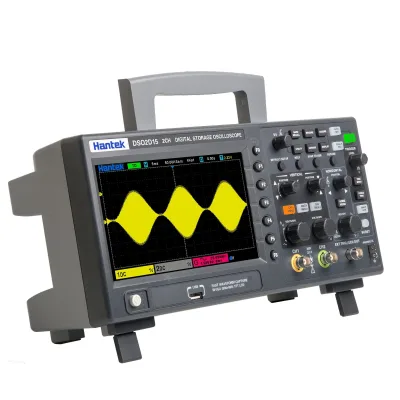
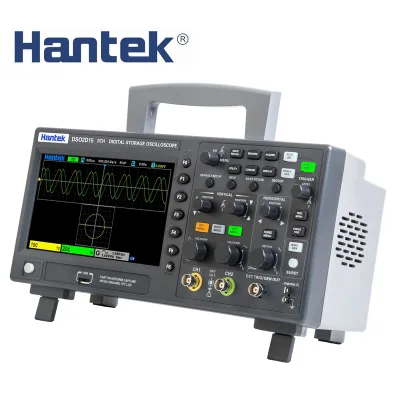
The physical form factor of the oscilloscope is a primary decision point for procurement, as it dictates the deployment environment. The market data reveals two distinct structural categories: handheld and desktop. Handheld units are designed for portability and field service, often featuring compact dimensions such as 330mm x 300mm x 48mm or 150mm x 200mm x 48mm. These units are ideal for on-site troubleshooting in electric power measurement or impedance testing where mobility is paramount.
Conversely, desktop models are designed for laboratory or benchtop environments. These units often feature larger chassis dimensions, such as 378mm x 218mm x 120mm, and are optimized for stability and extended operation. The desktop form factor is frequently associated with dual-channel configurations, which are standard for general-purpose voltage and frequency measurements. The choice between handheld and desktop structures should be driven by the mobility requirements of the end-user and the available workspace in the testing facility.
Packing standards also vary by form factor. Handheld units may be shipped in standard cartons, while desktop oscilloscopes often utilize specialized packaging such as "Carton Box for Dual Channel Oscilloscope" or "Foam+Carton" combinations to ensure protection during transit. The weight of the unit is another consideration; some handheld models are noted to weigh approximately 1.90KG, making them easy to carry, while desktop units are naturally heavier due to their larger internal components and cooling systems.
Compliance, Certification, and Standard Verification
In the B2B procurement of electronic test equipment, verifying compliance with international standards is non-negotiable. While specific certification bodies are not listed in the provided data, buyers must rigorously verify that the product meets relevant safety and electromagnetic compatibility (EMC) standards for the target market. The observed data references specific physical standards, such as dimensions (e.g., 318 x 110 x 150mm) and model numbers (e.g., MSO2000, UPO7000, UTD4302CM), which serve as identifiers for specific product lines.
Buyers should request documentation confirming that the device adheres to safety standards for electrical equipment, such as IEC 61010-1, which covers requirements for electrical equipment for measurement, control, and laboratory use. Additionally, electromagnetic compatibility standards like IEC 61326 must be verified to ensure the instrument does not emit excessive interference and can operate reliably in noisy industrial environments. The "Automatic Digital Dual Channel Oscilloscope" and "High Quality Automatic Digital Storage Oscilloscop" labels found in the data suggest a focus on automated operation, but these are marketing descriptors rather than formal certifications.
It is crucial to note that the provided data does not confirm specific third-party certifications (e.g., UL, CE, FCC) for any specific model. Therefore, procurement teams must treat these attributes as observations of the product line rather than guaranteed compliance for every unit. The buyer's responsibility is to request the specific test reports and certification documents from the supplier before finalizing the purchase. This due diligence ensures that the equipment can be legally imported and used in the intended jurisdiction without regulatory penalties.
Cost Drivers and Economic Factors in Procurement
The cost of a digital oscilloscope with a built-in signal source is influenced by a complex interplay of technical specifications and market dynamics. The observed price range in the market is extensive, spanning from $70 to $110,200. This vast disparity highlights that price is not a linear function of the product name but is driven by the specific combination of bandwidth, sampling rate, memory depth, and channel count.
The primary cost drivers include the bandwidth and sampling rate. Units with bandwidths exceeding 1GHz and sampling rates of 2GSa/s command a premium over those with 200MSa/s sampling rates. Similarly, memory depth is a significant cost factor; a unit with 140Mpts of memory will be substantially more expensive than one with 8mpts, as the memory chips and processing power required to handle such data are more costly. The inclusion of a built-in signal source also adds to the base cost, as it integrates the functionality of a function generator into the oscilloscope chassis.
Minimum Order Quantity (MOQ) is another economic factor to consider. The observed MOQ range is between 1 and 5 units. This flexibility allows small businesses to purchase single units for pilot testing, while larger enterprises can negotiate bulk orders within the 1-5 range to potentially secure volume discounts. However, buyers should be aware that the MOQ is a supplier-specific constraint and may vary based on the model and current inventory levels.
Power consumption is a secondary but relevant cost driver, particularly for large-scale deployments. Some models are specified with power consumption of less than 15W, which can lead to significant energy savings over the lifespan of the equipment, especially in 24/7 operation environments. When evaluating the total cost of ownership, buyers should factor in not just the purchase price but also the energy efficiency and the potential need for accessories like probes, cables, and calibration services.
Typical Applications and Operational Use Cases
The versatility of digital oscilloscopes with built-in signal sources makes them suitable for a wide array of industrial and laboratory applications. The observed data lists a comprehensive set of applications, including electric power measurement, impedance measurement, temperature measurement, displacement measurement, pressure measurement, magnetic field measurement, voltage measurement, frequency measurement, time measurement, and phase measurements. This breadth of application underscores the importance of selecting a unit with the appropriate channel count and measurement capabilities.
In the electric power sector, these instruments are used to analyze power quality, harmonics, and transient events. The built-in signal source allows engineers to inject test signals into the power system to verify the response of protection relays or power converters without needing separate equipment. For impedance and magnetic field measurements, the high sampling rate and deep memory are essential for capturing the nuances of the signal response over time.
In the context of voltage and frequency measurement, the dual-channel configuration is particularly valuable. It allows for the simultaneous monitoring of input and output signals, facilitating the analysis of gain, phase shift, and signal integrity. The automatic trigger modes observed in the data ensure that the oscilloscope can capture sporadic events without manual intervention, which is critical for unattended monitoring in industrial settings.
The application of these devices extends to research and development, where the ability to generate precise waveforms and capture the resulting system response is vital. For example, in temperature and pressure measurement applications, the oscilloscope can interface with transducers to monitor the dynamic response of the sensing elements. The 7-inch TFT display provides a clear view of these complex interactions, aiding in rapid diagnosis and debugging.
Supplier Evaluation and Quality Assurance Protocols
Evaluating suppliers for digital oscilloscopes requires a rigorous approach to ensure the quality and reliability of the equipment. The origin of the products is a key factor, with the observed data indicating that the products originate from China. While this is a common manufacturing hub for electronic test equipment, buyers must verify the specific manufacturing capabilities and quality control processes of the supplier.
Buyers should request detailed information about the supplier's quality management system, including ISO 9001 certification if available. The "High Quality" and "Automatic" descriptors in the product data are marketing terms and should not be taken as evidence of a robust quality system without supporting documentation. It is essential to ask for calibration certificates and traceability records for the units being purchased.
The customization availability noted in the data is a significant advantage for buyers with specific requirements. Suppliers offering customization can tailor the firmware, interface, or physical dimensions to meet unique operational needs. However, buyers must ensure that any customization does not compromise the safety or performance of the device.
Quality control should also extend to the packaging and shipping process. The observed packing methods, such as "Carton," "Foam+Carton," and specific boxes for dual-channel units, indicate an awareness of the need for protection during transit. Buyers should verify that the packaging is sufficient to prevent damage during shipping, especially for delicate components like the TFT display and internal circuitry.
Long-Term Procurement and Lifecycle Management
Procuring a digital oscilloscope is a long-term investment that requires consideration of the product's lifecycle. The built-in signal source adds value by reducing the need for external equipment, but it also introduces a dependency on the manufacturer for firmware updates and support. Buyers should inquire about the supplier's policy on software updates and the availability of spare parts.
The warranty period and after-sales support are critical factors in long-term procurement. A robust warranty should cover defects in materials and workmanship, while after-sales support should include technical assistance, calibration services, and repair options. The observed "Automatic" features suggest a reliance on software, making the availability of technical support for software troubleshooting essential.
Maintenance and calibration are ongoing costs that must be factored into the procurement strategy. Regular calibration ensures that the oscilloscope continues to meet its specified performance parameters, such as bandwidth and sampling rate. Buyers should establish a maintenance schedule and budget for periodic calibration to ensure the reliability of their measurements over time.
Finally, the obsolescence of the technology is a consideration. As digital oscilloscope technology advances, older models may become less compatible with new software or protocols. Buyers should assess the upgrade path offered by the supplier and the longevity of the product line to ensure that the investment remains relevant for the intended duration of use. By carefully evaluating these long-term factors, buyers can secure a reliable and cost-effective solution for their testing and measurement needs.
FAQs
What is the typical sampling rate for these oscilloscopes?
Sampling rates vary from 200MSa/s to 2GSa/s depending on the model. High-performance units offer 2GSa/s for capturing fast transients, while general-purpose desktop models often provide 1GSa/s or 200MSa/s for standard measurements.
Which memory depth options are available for deep capture?
Memory depths range from 8 megapoints to 140 megapoints across different models. Units with 12Mpts or 140Mpts allow for longer acquisition times at high sampling rates, which is essential for debugging complex digital protocols.
Can these devices be used for electric power measurement?
Yes, these oscilloscopes support electric power measurement along with impedance and voltage measurement. The built-in signal source enables engineers to inject test signals into power systems to verify the response of protection relays.
What is the price range for digital oscilloscopes with this feature?
The observed price range spans from 70 USD to 110,200 USD. This wide disparity reflects differences in bandwidth, sampling rate, memory depth, and channel count rather than a single fixed price point for all units.
Are handheld and desktop structures available for these instruments?
Both handheld and desktop structures are available in the market. Handheld units are compact and portable, while desktop models are designed for laboratory stability and often feature dual-channel configurations for general-purpose measurements.
What is the minimum order quantity for purchasing these units?
The minimum order quantity ranges from 1 to 5 units depending on the supplier. This flexibility allows small businesses to purchase single units for pilot testing while larger enterprises can negotiate bulk orders within this range.
Do these oscilloscopes come with built-in signal sources?
Yes, many models feature a built-in signal source to generate precise test signals. This integrated function allows for waveform generation without requiring external hardware, simplifying the testing setup for various applications.